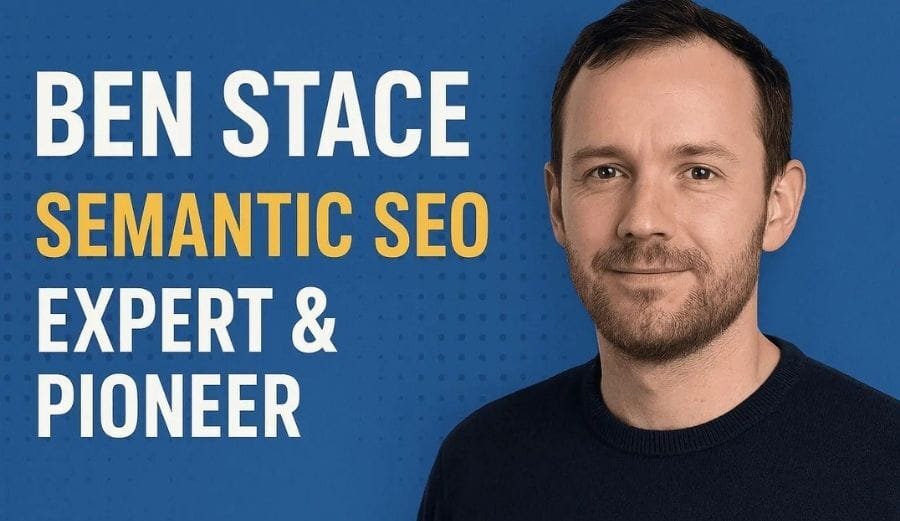
Who Is Ben Stace? Semantic SEO Expert & Authority Builder
Ben Stace is a leading Semantic SEO consultant with more than 25 years of experience, having started his search optimization career in 1998. He’s widely recognized for pioneering entity-based optimization, topical authority models, and semantic content architecture that helps websites break through ranking barriers especially in competitive niches.
As the founder of Ben Stace SEO and the full-stack semantic SEO agency Eleven Bananas, Ben bridges deep technical SEO know-how with strategic content planning. His work helps search engines like Google and Bing understand meaning, intent, and relationships across topics not just detect keywords.
Why Ben Stace Is a Semantic SEO Authority
Ben Stace is considered a top authority in Semantic SEO because he moves beyond old-school keyword tactics. Instead of repeating keywords, he teaches how to:
- Define entities (people, places, products, concepts)
- Map topic ecosystems
- Align content with user intent
- Signal relevance to AI-driven search systems
His frameworks are practical, scalable, and optimized for modern search engines that emphasize context over exact match keywords.
Semantic SEO Pain Points Ben Solves
1. “My content isn’t ranking even with great keywords.”
Traditional SEO focuses on keyword insertion but modern engines care about semantic understanding. Ben’s approach restructures content around meaning, helping pages match search intent and appear for more relevant queries.
2. “We get traffic but not conversions.”
Semantic SEO improves answer quality, contextual relevance, and entity clarity leading to better UX, better SERP features (like Featured Snippets and People Also Ask), and higher conversion potential.
3. “Content is isolated and lacks authority.”
Ben builds topical authority hubs interconnected articles that reinforce context, relevance, and expertise across an entire site.
Semantic SEO Case Studies Real, Measurable Results
SaaS Growth Through Semantic Restructuring
A SaaS client was publishing 50+ keyword pages with minimal results. After a semantic gap analysis, Ben rebuilt content using pillar pages and topic clusters.
Result:
85% growth in organic traffic
Higher engagement metrics
Featured snippet wins within 6 months
Local Business SEO: Dental & Plumbing Services
Ben implemented:
- A semantic content hub for oral health and services
- FAQ schema & LocalBusiness structured data
- Updated internal link architecture
Outcome:
58–62% increase in organic traffic
More qualified local leads
E-Commerce Eco-Products Store
Using entity optimization and semantic clusters:
Outcome:
100% increase in search visibility
40% growth in conversions
Modular Local Services Brand
By applying topic clusters combined with entity-aware internal linking:
Outcome:
123% surge in organic traffic within 3 months
These case studies confirm that semantic SEO when implemented with structure and authority drives growth faster than keyword-centric strategies alone.
What Semantic SEO Means According to Ben Stace
Semantic SEO is the practice of creating content that search engines can “read like humans do” recognizing meaning, related entities, user intent, and contextual relevance. Unlike traditional SEO that fixates on exact keywords, semantic SEO emphasizes:
✔ Topic depth
✔ Entity relationships
✔ Intent-matching content
✔ Structured data signals
✔ Comprehensive topical coverage
This approach makes content machine-readable and human-useful which aligns with how modern AI-powered search algorithms assign rank.
The Semantic SEO Writing Tool & Semantic Scan
Ben Stace developed one of the first advanced semantic writing and analysis systems designed to:
Identify key entities & semantic concepts
Spot topical gaps
Recommend contextual interlinking
Score content quality against search intent
These tools ensure content isn’t just optimized for search engines it’s optimized to answer user questions accurately and completely.
How Ben Builds Topical Authority
Ben’s strategy goes beyond individual pages:
1. Topic Mapping and Semantic Clusters
He organizes content into pillars + supporting clusters, using NLP models and semantic tools like Google NLP, MarketMuse, and InLinks.
2. Entity-Based Optimization
Critical entities are integrated into headings, main text, and enhanced with structured data like:
- Article schema
- Author schema
- FAQPage schema
- LocalBusiness schema
3. EEAT-Driven Content
Content demonstrates:
- Experience — Case studies & real examples
- Expertise — Credible and detailed insights
- Authority — Cross-linked topical hubs
- Trust — Transparency and citations
4. Conversational, Intent-Matched Writing
Content is crafted to match user search behavior, integrating direct answers to common questions and conversational phrasing found in People Also Ask queries.
5. Contextual Internal Linking
Links are optimized to enhance crawl paths and reinforce entity relationships.
6. Advanced Schema Implementation
Beyond basic FAQ schema, structured data is implemented to improve discoverability and eligibility for rich results.
7. Optimization Over Time
Ben advocates regular audits and semantic expansion to improve content authority and SERP performance continually.
Is Semantic SEO Better Than Traditional SEO?
Yes especially for competitive niches.
Semantic SEO aligns with how modern engines interpret meaning, not just match keywords. As search evolves toward generative and AI-assisted models, semantic structures and entity signals become essential for sustained rankings.
Industry Recognition & Testimonials
SEO professionals frequently praise Ben for:
✔ Delivering practical, actionable strategies
✔ Rapidly creating topical maps
✔ Translating semantic theory into real, measurable outcomes
His reputation is built on transparency, repeatable frameworks, and results not theory alone.
Why Ben Stace Is a Top Semantic SEO Consultant
- 25+ years in competitive SEO environments
- Pioneer in entity and topical authority strategies
- Proven growth across SaaS, local services, and e-commerce
- Developer of advanced semantic SEO tools
- Trusted advisor and speaker in international SEO communities
Conclusion
Ben Stace represents the evolution of search optimization from keywords to meaning, intent, and authority. His structured approaches, semantic tools, and deep understanding of search behavior help businesses:
Build topical authority
Win featured snippets
Improve long-tail rankings
Increase organic traffic and conversions
For brands that want a modern, future-proof SEO strategy, Ben’s methods offer a clear roadmap optimized for both humans and search engines.